
Be Here Now: Why the Present Moment Matters
Discover how coming back to the present moment can help you feel calmer, notice more of what’s good, and reconnect with the happiness and power available right here, right now.

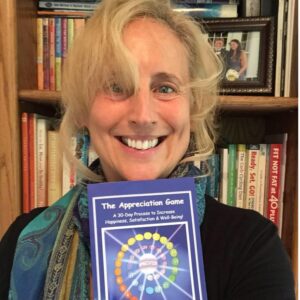

“Your thoughts are not just creating your experience. They’re creating the chemistry that shapes your experience.” — Bonnie Durkin
Have you ever noticed how differently you can feel depending on what you’ve been thinking about?
You wake up feeling fine. Then you start thinking about a problem, a worry, a difficult conversation, or something that isn’t going the way you’d hoped.
Within minutes, your mood begins to change. You feel anxious. Frustrated. Discouraged. Overwhelmed.
It can happen so quickly that it feels as though your mood simply appeared out of nowhere. But what many people don’t realize is that our thoughts and moods are deeply connected.
Years ago, I believed my moods were simply something that happened to me. If I woke up feeling anxious, discouraged, or frustrated, I assumed I was at the mercy of those feelings.
What I didn’t understand at the time was that my thoughts were constantly sending instructions to my brain about which chemicals to produce.
When I was 25 years old, I ended up in the emergency room with a heart rate of 220 beats per minute. It was terrifying and for months afterward, I lived in fear that it would happen again.
Looking back, I can see that while the physical symptoms were very real, my thoughts were continuously fueling my fear and keeping my nervous system on high alert.
I didn’t know it then, but I was helping to create the very emotional state I was trying so desperately to escape.
Your Brain Is a Chemical Factory
One of the most important things I’ve learned over the years is that the brain is constantly producing chemicals in response to our thoughts.
When you think a stressful thought, your brain responds differently than it does when you think a grateful or hopeful thought. When you focus on what could go wrong, your brain begins preparing your body for danger. When you focus on what is working, what you appreciate, or what you’re looking forward to, a different set of chemicals begins to flow.
This doesn’t mean you should ignore real challenges or pretend everything is perfect. It simply means that your thoughts matter. More than most people realize.
Every thought is like a message being sent to your brain and body and those messages influence how you feel.
Why Negative Thoughts Feel So Powerful
If you’ve ever wondered why your mind seems drawn to worry, criticism, or worst-case scenarios, you’re not alone.
Your brain was designed to help you survive.
Thousands of years ago, paying attention to potential threats helped keep our ancestors alive. As a result, the human brain naturally pays more attention to what might be wrong than what is going right.
Psychologists often refer to this as the negativity bias.
Your brain isn’t trying to make you unhappy. It’s trying to protect you.
The problem is that many of us spend so much time focused on potential problems that our nervous systems rarely get the message that we’re safe. And when the nervous system stays activated, stress, anxiety, frustration, and overwhelm become much more common.
Thoughts Become Moods
One worried thought doesn’t usually create an anxious life. One frustrated thought doesn’t create chronic stress. But thoughts repeated over and over again begin to create familiar emotional states.
Think of it like walking through a field. The first time you walk through tall grass, there’s no path. But if you walk the same route every day, eventually a trail begins to form.
The same thing happens in the brain. Repeated thoughts strengthen neural pathways. Those pathways make certain thoughts easier to think. Those thoughts create familiar emotions. And over time, those emotions begin to feel normal.
Many people assume they’re experiencing life exactly as it is. But often they’re experiencing life through the lens of the thoughts they’ve practiced most.
The Good News
The good news is that while we can’t control every thought that enters our minds, we can become more aware of them.
We can begin noticing where our attention is going. We can choose what we focus on. And that choice is more powerful than most people realize.
A small shift in attention can create a small shift in emotion. A small shift in emotion can create a small shift in behavior. And those small shifts, repeated consistently, can begin changing the direction of your life.
Try This Today
Several times throughout the day, pause and ask yourself:
What have I been thinking about for the last few minutes?
Then ask:
Is this helping me feel the way I want to feel?
If the answer is no, gently redirect your attention. Think about:
Something you’re grateful for
Something that is working in your life
Something you appreciate about yourself
Something you’re looking forward to
Someone you love
You don’t have to force positive thinking. You simply need to become more intentional about where you place your attention.
Final Thoughts
The thoughts you consistently think don’t just influence your mood. They influence how you see yourself. They influence the identity you reinforce. And ultimately, they influence the life you create.
That’s why becoming aware of your thoughts is one of the most powerful things you can do for your emotional well-being.
Because when you begin changing your thoughts, you begin changing your feelings. And when you begin changing your feelings, you begin changing your experience of life.
Small shifts really do create powerful change!
With love,
Bonnie
Discover how coming back to the present moment can help you feel calmer, notice more of what’s good, and reconnect with the happiness and power available right here, right now.

Discover how the autumn equinox can inspire you to restore balance, release what no longer serves you, and make more room for what truly matters in this season of your life.

Discover how one intentional morning thought can shift your perspective, calm your nervous system, and help you begin each day with gratitude, choice, and purpose.

Learn how mindfulness and a simple shift in perspective can help you stop postponing happiness, appreciate the present moment, and create more good days.

Discover the meaning of the 2026 Pisces lunar eclipse and a simple ritual to release what isn’t yours, stop overthinking, and make room for trust and ease.

Discover how choosing wonder, noticing everyday beauty, and shifting your focus can reduce stress, calm your nervous system, and help you feel more present and grateful.

Learn how the Loving Kindness practice supports nervous system regulation, reduces anxiety and stress, improves emotional well-being, and helps you cultivate compassion for yourself and others.

Discover how combining EFT tapping, the 9-Gamut Technique, eye movements, and deep breathing can help regulate your nervous system, reduce anxiety, and improve mental flexibility in just five minutes.

Learn how talking to yourself while walking can help regulate your nervous system, reduce stress and overwhelm, organize racing thoughts, and improve emotional resilience.
Learn why nervous system regulation is essential for reducing stress and anxiety, improving emotional resilience, and creating lasting health, healing, and personal transformation.

Discover why waiting for success, abundance, or happiness may be holding you back. Learn how feeling better can help you create the life you desire.
Discover how your thoughts influence your mood, brain chemistry, and emotional well-being—and learn simple ways to create more positive emotional states.

Learn how to change your identity, rewire subconscious patterns, and create lasting change through thoughts, emotions, and daily habits.

Why You Keep Going Back to the Old Version of You Have you ever noticed how easy it is to start changing… but how hard it can be

What Gratitude Does to Your Brain & Nervous System I’m a huge believer in the power of appreciation. So much so that I wrote a whole book about

Embracing the Fire Horse Energy of 2026: Working with Fire Horse Energy & the Power of a Numerology One Year While many celebrate new beginnings on January 1st,

Full Moon Reflections The holiday season is upon us, and I know many of us are feeling the mix of emotion that comes with this time of year

What Are You Feeding Your Mind? “Stand guard at the doorway of your mind, letting in only what you wish to manifest.” – Ralph Waldo Emerson Have you

Your Thoughts, Your Stress, Your Shift: Calming the Nervous System from the Inside Out “The greatest weapon against stress is our ability to choose one thought over another.”

Walking Your Way to a Better Mood We often think of walking as just a form of exercise, but it’s so much more than that. Walking is not

Every Subject Has Two Sides: Which One Are You Practicing? Last week, we talked about Closing the Gap—that space between where you are right now and where you

Closing the Gap: Becoming a Vibrational Match to What You Want Have you ever noticed the gap—the space between where you are right now and where you really want

Flipping the Script on Stuff That Stresses You Out We all have certain subjects in our lives that trigger stress, worry, or fear the moment we think about
The Power of Expectation: What Are You Looking For? We all know how it feels to walk into a situation with dread, already bracing for the worst—and then,